
.svg)
.svg)
.svg)
.svg)
.svg)
.svg)
.svg)
.svg)
.svg)
.svg)
.svg)
.svg)
Publication Date: August 27, 2026
Crypto had a strong week last week. Bitcoin rose to around $79,000, and Ethereum surged by approximately 31% to over $2,500. The reasons for this were lower U.S. interest rates, positive signals from Washington, and a major short squeeze. We discussed this last week in our article “Bitcoin Breaks Through $71,000: Why the Price Rose Over 10% in a Single Day.” You can read that article HERE.
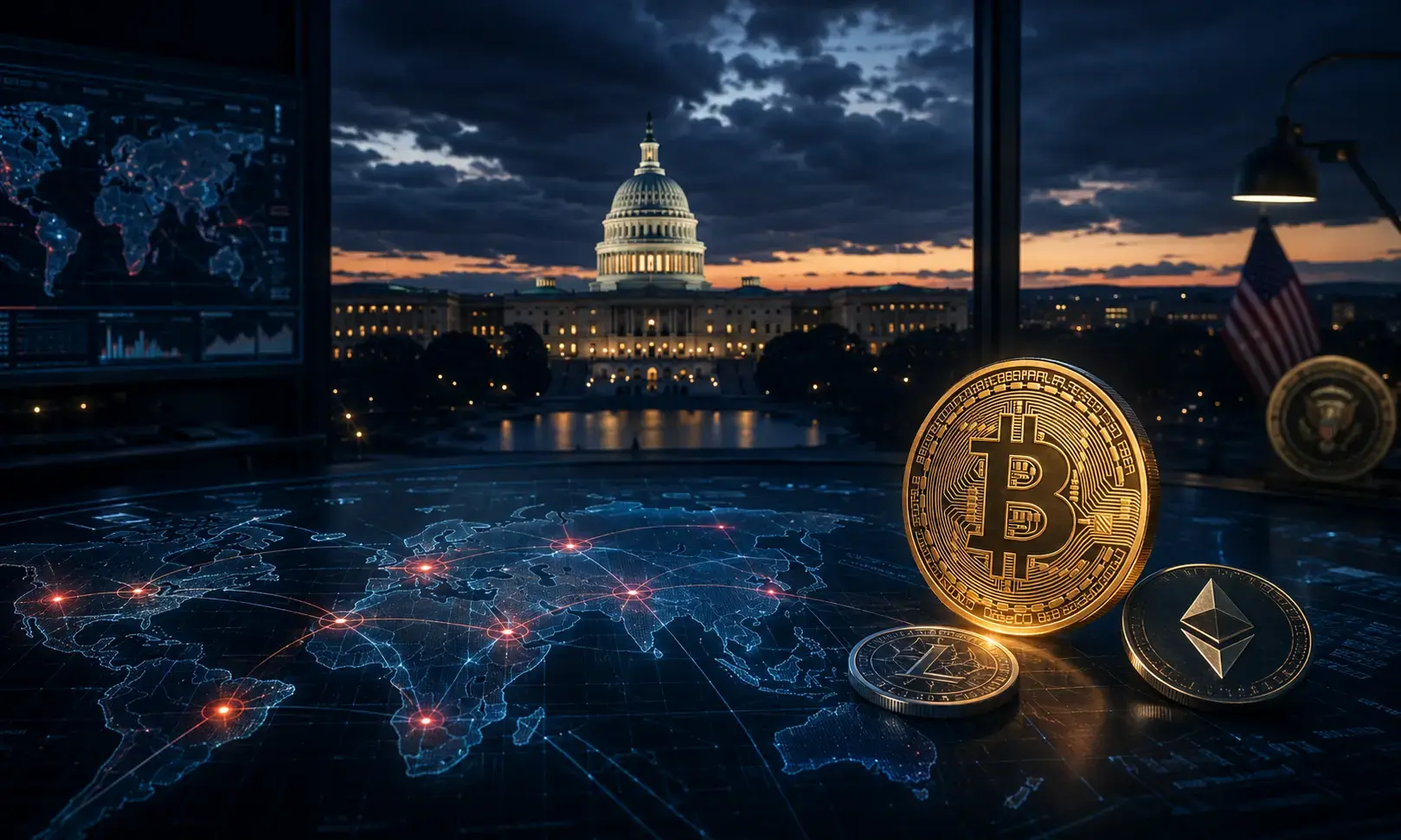
But something else happened this week something that could be more significant in the long term than that price surge. On August 24, the U.S. Department of the Treasury designated crypto as a full-fledged sector within its sanctions policy against Iran for the first time. For investors, this is a telling moment. It shows just how big crypto has become. So big, in fact, that governments can not only fuel it with liquidity but also use it as a lever against their adversaries.
What exactly changed
The department launched a campaign called Operation Economic Outcast. As part of this, nearly 60 individuals, companies, and ships linked to Iran were added to the sanctions list. Even more significant was a broader measure. Under an existing presidential executive order, the U.S. designated five sectors of the Iranian economy as targets: digital assets, technology, gold, aviation, and shipping.
Treasury Secretary Scott Bessent called the broader campaign an “economic D-Day.” That is a deliberately dramatic term, intended to emphasize the scale of the pressure. Crypto was one of the five sectors targeted, not the whole story. But it is precisely that mention that is new.
The U.S. had previously sanctioned individual Iranian crypto exchanges. What’s different now is that crypto has been designated as an entire sector. As a result, officials can now target anyone providing services to that sector, rather than having to name each wallet or exchange individually.
Why this applies primarily to exchanges
This is the part that directly affects the crypto world. Designating an entire sector means that the sanctions don’t stop at Iranian companies themselves.
Take a crypto exchange, anywhere in the world, that processes a large transaction for an Iranian crypto company. Even if that Iranian counterparty isn’t specifically listed on the sanctions list, that exchange now risks losing its access to the U.S. financial system. That’s a massive threat, because no serious exchange can function without access to the dollar.
The practical consequence is that platforms must tighten their screening. Previously, they checked transactions against lists of specific addresses. Now they must look at the sector as a whole and become much more cautious about anything with even the slightest Iranian connection. For ordinary users, little will change, but behind the scenes, this is forcing the entire industry to implement stricter controls.
Why Iran Is the Trigger
Iran is increasingly turning to crypto to move money outside the traditional banking system, a system the country has been largely cut off from for years due to international sanctions. Research firm Chainalysis estimates that Iran's crypto economy will reach more than $7.78 billion by 2025, a figure the firm itself calls a conservative estimate. Notably, stablecoins, coins pegged one-to-one to the dollar, play the leading role here rather than Bitcoin itself.
In response, U.S. Treasury Secretary Scott Bessent announced stricter measures this week against countries that do not sever their ties with Iran. He did not yet specify any concrete new penalties or a deadline, though he did state that “patience is not infinite.”
What does this mean for investors?
The key takeaway from this week is that crypto has now become political in two directions at once. Two developments are therefore at the top of the watchlist:
- First, the tension with Iran itself: Tehran warned that cooperating with the U.S. pressure campaign could be interpreted as an act of war, and even raised the possibility of disrupting oil shipments through the Persian Gulf. If this were to escalate, it would affect the broader market through oil prices and inflation, which could ultimately hit crypto harder than the sanctions themselves.
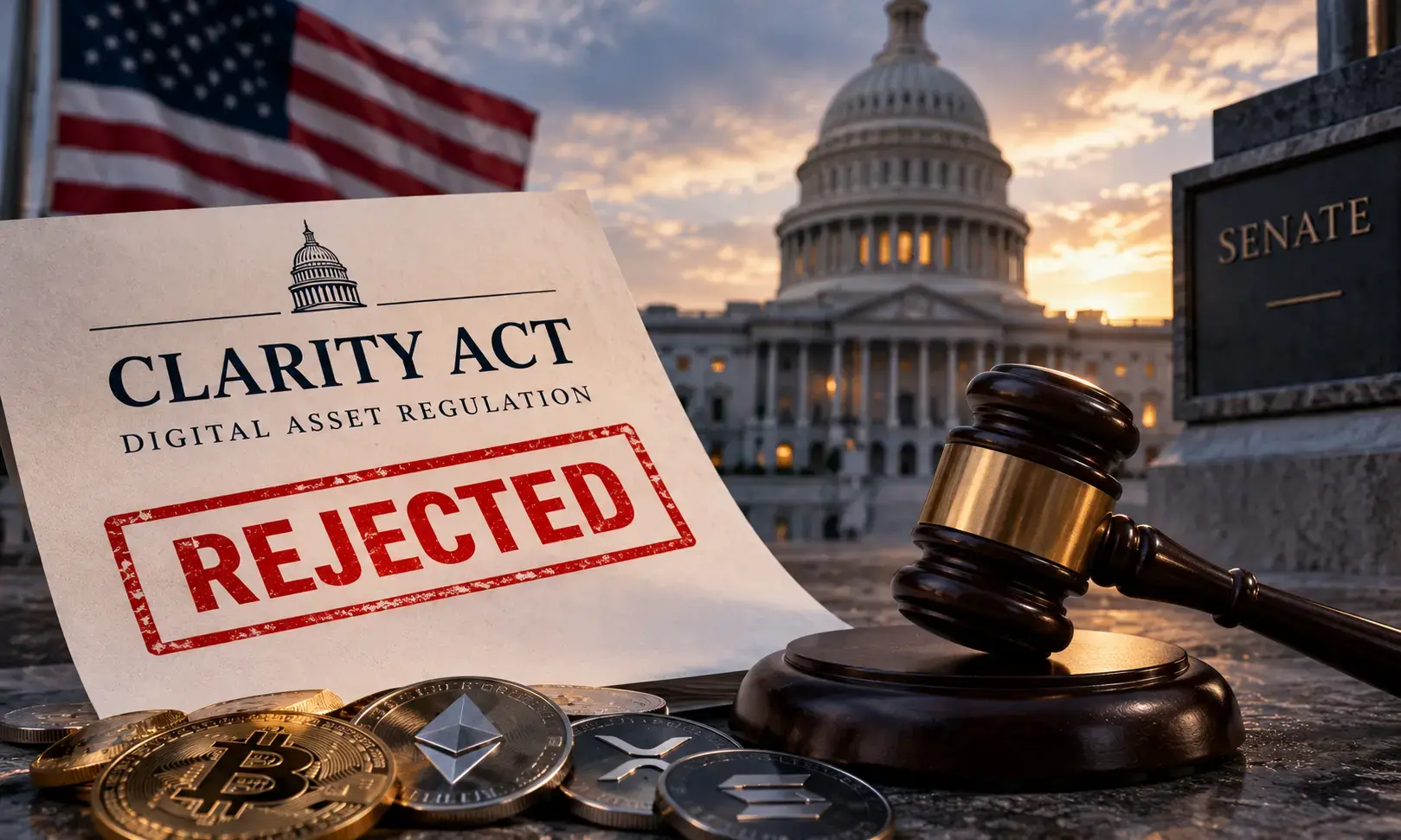
- Second, the vote around September 15 on the CLARITY Act, which is intended to determine whether cryptocurrencies should be treated as securities or commodities. Clear rules could give large institutional investors more confidence to enter the market.
Conclusion
Crypto is no longer a niche experiment. The market has grown large enough to be both propelled by government policy and targeted by sanctions, without prices being significantly affected. For investors, this means that geopolitics is now just as important as the charts themselves, especially with tensions in Iran and the CLARITY Act vote still on the horizon.
Disclaimer: Investing involves risks. Our analysts are not financial advisors. Always consult an advisor when making financial decisions. The information and tips on this website are based on our analysts’ own insights and experiences. They are therefore for educational purposes only.






-2.webp)