.svg)
.svg)
.svg)
.svg)
.svg)
.svg)
.svg)
.svg)
.svg)
.svg)
.svg)
.svg)
Publication Date: June 18, 2026
For Dutch crypto investors, the news about Binance and Europe may sound familiar, and it is. The world’s largest crypto exchange already has a long history of regulatory conflicts in our country. Now, the exchange is also at risk of losing the broader European market. What’s going on, and what does this mean for those who still trade via Binance?
The Netherlands took the first step toward stricter oversight of Binance
Anyone who follows the Dutch crypto market has known for some time that Binance and regulation don’t mix well. The problems began in 2021, when De Nederlandsche Bank (DNB) warned that Binance was operating illegally in the Netherlands without registration under anti-money laundering legislation.
In April 2022, an administrative fine of €3.3 million was imposed. DNB determined that Binance was serving a very large number of Dutch customers without the required registration, which had given the platform a significant competitive advantage over registered parties.
The story did not end with a fine. In June 2023, Binance announced it was leaving the Dutch market. As of July 17, 2023, Dutch users could no longer make new purchases, deposits, or trades. Tens of thousands of customers switched to local alternatives such as Bitvavo and Coinmerce. The Netherlands was thus one of the first European countries where Binance actually shut its doors to retail users.
Now the same threat looms over all of Europe
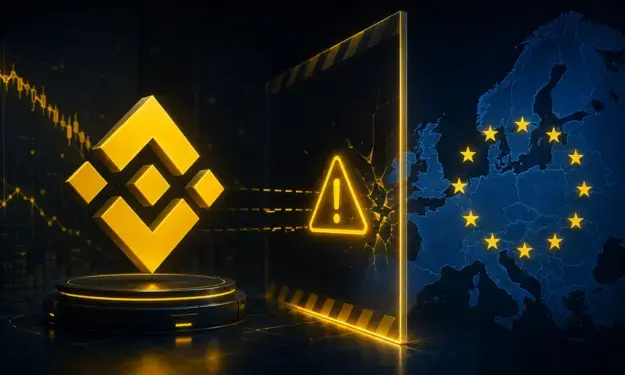
What happened in the Netherlands at the time is now unfolding on a European scale. Under the new MiCA legislation, all crypto companies wishing to operate in the EU must obtain an official license by July 1, 2026, at the latest. Binance submitted its application to the Greek regulator, but according to multiple insider sources, that application is on the verge of being rejected.
In practical terms, a rejection means that Binance will not gain access to so-called “passporting” rights: a single license that allows a company to operate in all 27 EU member states. Without that approval, Binance will no longer be allowed to offer crypto services within the EU as of July 1.
Binance itself remains optimistic. The company states that it has worked constructively with regulators for eighteen months and says it has not received a formal rejection. It promises to provide more clarity to European users before June 30.
What does this mean if you’re still trading on Binance?
For Dutch investors, the immediate impact is limited, as Binance had already withdrawn from the Netherlands. However, anyone who is still actively trading on the platform via another EU country or a VPN, or who still has funds on the platform, would be wise to take action.
It is expected that unlicensed platforms will be required to present an orderly wind-down plan, in which customers are informed in advance and the transfer of funds to an authorized provider or their own wallet is facilitated. In practice, this means: make sure your funds are transferred to your own wallet or a regulated exchange in a timely manner. For Dutch investors, Bitvavo and Coinmerce are the most obvious alternatives; both are DNB-registered and fully MiCA-compliant.
What does this say about the broader crypto market?
The Binance case is more than just a legal matter. It marks a turning point in how Europe deals with crypto. MiCA is the first large-scale European effort to bring the crypto sector under a single regulatory umbrella, and the handling of Binance shows that the EU means business. Estimates suggest that approximately 75% of established crypto companies risk losing the right to operate in Europe if they do not obtain a MiCA license in time.
For investors, this is ultimately good news in the long term: more regulation means more protection, more transparency, and a more stable market. In the short term, however, it requires action from anyone still trading on unlicensed platforms.
Conclusion
Binance already lost the Dutch market in 2023. Now it risks losing the entire European market. The July 1 deadline is fast approaching, and the chances of a positive turn of events seem slim. For investors, the message is clear: check which platform you’re trading on, make sure your funds are secure, and consider switching to a MiCA-certified alternative in a timely manner.
Disclaimer: Investing involves risks. Our analysts are not financial advisors. Always consult an advisor when making financial decisions. The information and tips on this website are based on our analysts’ own insights and experiences. They are therefore for educational purposes only.


-2.webp)