.svg)
.svg)
.svg)
.svg)
.svg)
.svg)
.svg)
.svg)
.svg)
.svg)
.svg)
.svg)
Publication date: May 7, 2026
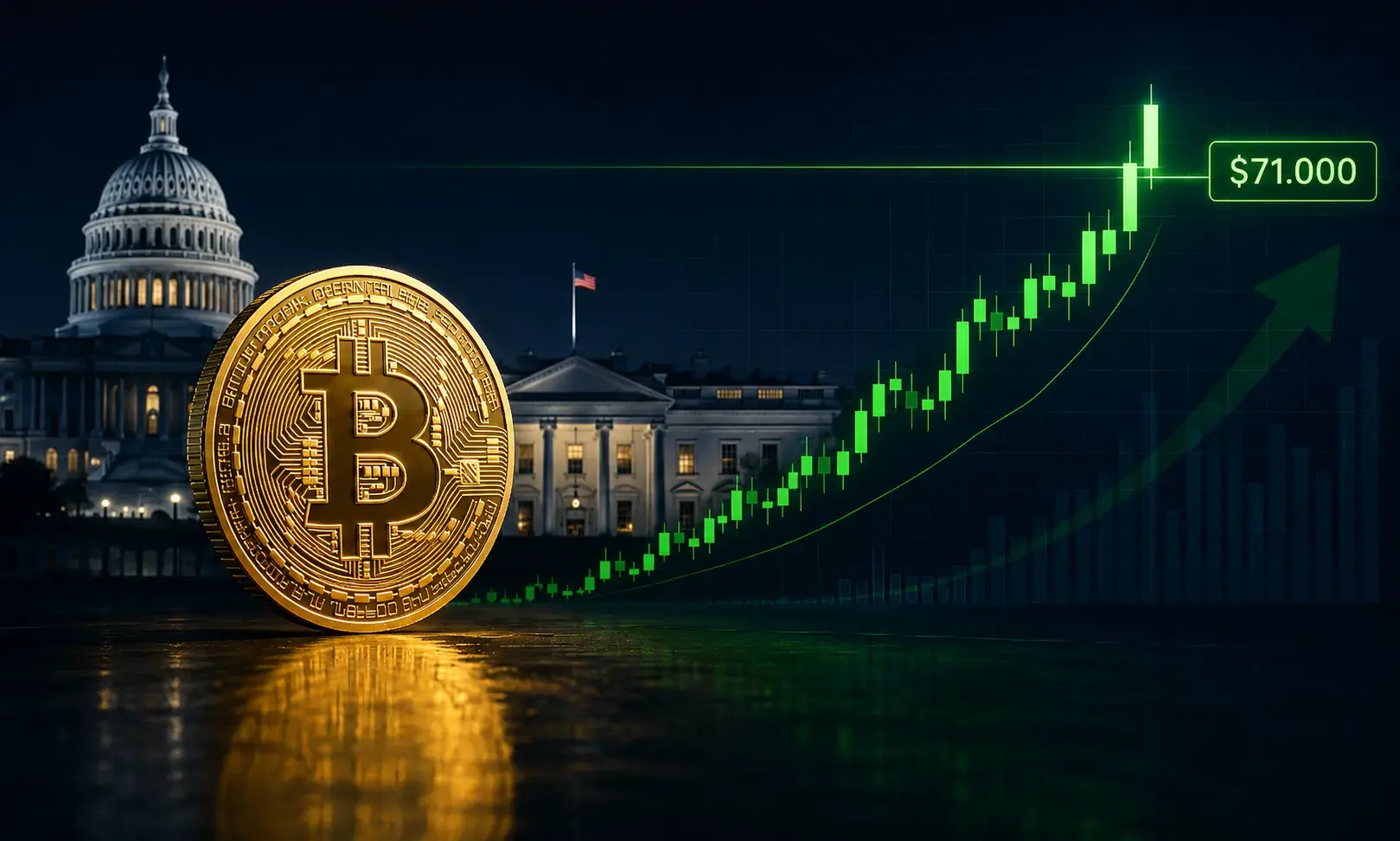
The crypto market is currently watching Washington closely. On Friday evening, May 1, the long-awaited proposal for the U.S. Digital Asset Market Clarity Act, better known as the CLARITY Act, was finally released. Almost immediately, the markets reacted positively. Circle, the company behind the USDC stablecoin, rose nearly 20 percent, while Bitcoin broke through the $80,000 mark for the first time since January
However, some of the optimism quickly faded. Major U.S. banking organizations called the compromise insufficient, while crypto companies spoke of a major breakthrough. Coinbase CEO Brian Armstrong and Circle openly supported the agreement, while crypto investor Nic Carter stated that "the banks won in the end after all."
The big question now is: what does this mean for investors? And why is this U.S. legislation also relevant to European crypto investors?
The answer depends on what happens in the coming weeks.
What exactly is the CLARITY Act?
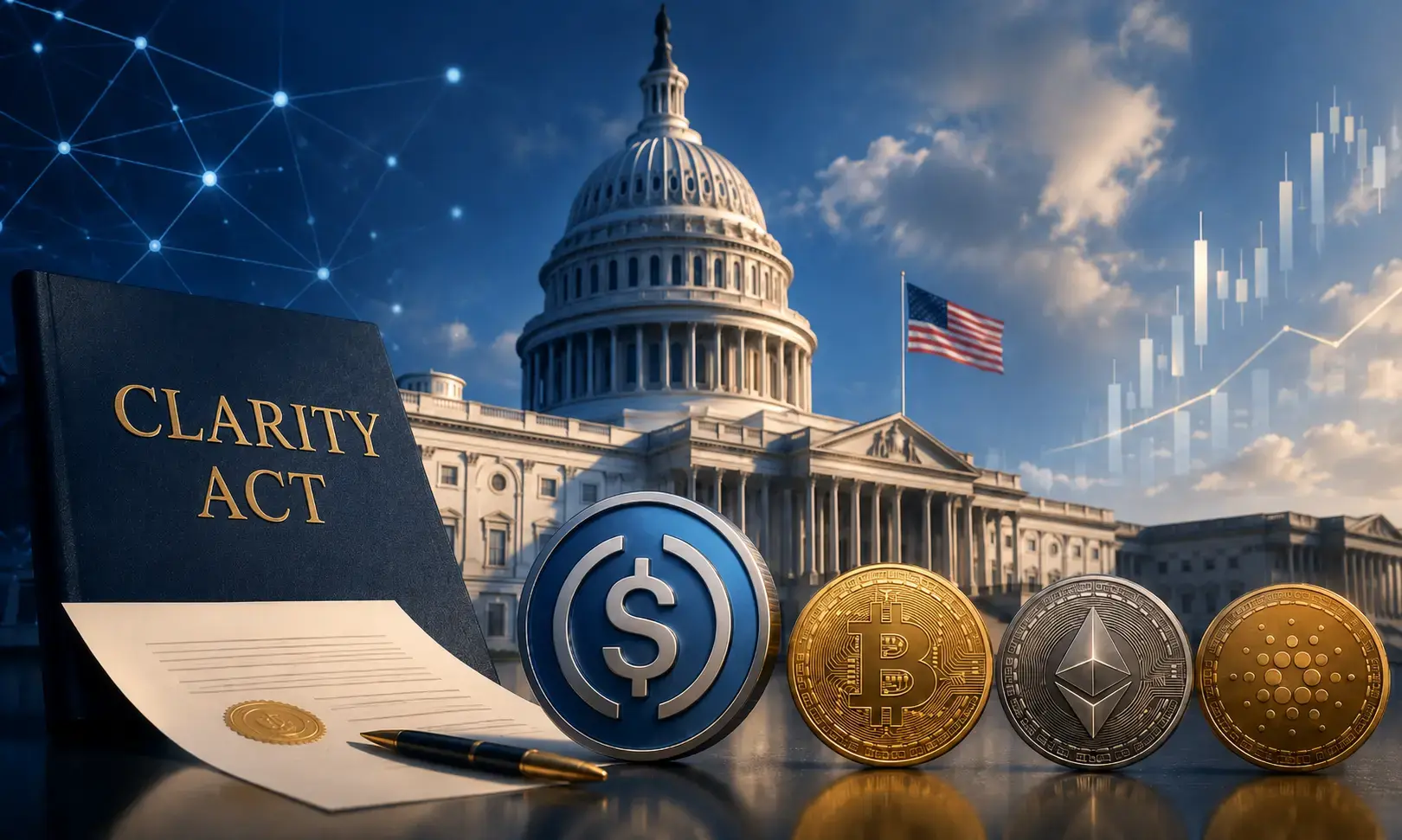
The CLARITY Act is intended to establish clearer rules for the U.S. crypto market. Among other things, the legislation determines when digital assets fall under the supervision of the SEC, the U.S. securities regulator, and when oversight falls under the CFTC, the U.S. regulator for commodities, futures and derivatives. Simply put, it is about which regulator is in charge of which part of the crypto market.
An important part of the law deals with stablecoins. These are crypto coins designed to hold a stable value, usually pegged to the U.S. dollar. Well-known examples are USDC from Circle and USDT from Tether. Stablecoins are widely used for payments, trading and temporarily parking money within the crypto market.
The main point of discussion
The central debate revolves around whether crypto companies may pay interest or rewards to users who hold stablecoins. U.S. banks warn that savings could flow away to crypto platforms if stablecoins continue to offer high returns. The crypto industry, meanwhile, sees a ban as a major obstacle to innovation.
The compromise now draws a clear line. Passive returns, similar to interest on a traditional savings account, will be banned for centralized crypto companies. However, rewards linked to actual use of a platform, such as staking, transactions or liquidity provision, will continue to be allowed.
With this, stablecoins are increasingly being treated as a means of payment and less as an alternative savings product.
What does this mean for investors?
For investors who earned returns simply by holding stablecoins on platforms such as Coinbase or Kraken, much may change. The model of passive interest on stablecoins is coming under further pressure.
At the same time, the difference between centralized crypto companies and DeFi is widening. Centralized platforms are companies where users trade through an account and where the platform often manages the crypto. These companies face stricter regulations directly.
DeFi works differently. In it, users connect their own wallet directly to software on the blockchain. There is no central party acting as an intermediary. As a result, some capital may continue to move toward DeFi in the coming years.
For stablecoin issuers such as Circle, the compromise seems positive for now. The price reaction shows that investors value clarity above all. So stricter rules need not always be negative, as long as companies know where they stand.
The political clock starts ticking
Before the CLARITY Act can be considered further, the Senate Banking Committee must first conduct a markup. During this step, senators discuss the text, suggest changes and vote on the version to move forward in the political process.
The timing is important. The U.S. Memorial Day recess begins May 21. If the markup does not occur before that date, the process could be delayed again. For the crypto market, that means more uncertainty.
Meanwhile, the banking industry continues to apply pressure. Banks want to prevent stablecoins from competing with traditional savings accounts. Crypto companies, on the other hand, want to keep room to develop new digital payment products.
Why is this globally important?
The CLARITY Act is not just important for U.S. investors. The act fits within a broader battle over the future of digital money. China is working on a digital yuan. Europe is working on the digital euro. Instead, the United States seems to be opting for private stablecoins under strict supervision.
This is important because most of the global stablecoin market is already pegged to the U.S. dollar. If the United States introduces clear rules, the dollar can remain dominant even within the digital economy.
Moreover, for institutional investors, clarity can be a reason to become more confident in crypto. Large financial institutions usually only enter the market more actively once regulations become clearer.
Three possible scenarios for the crypto market
-
Scenario 1: Rapid approval
In the first scenario, the markup proceeds without major problems and the compromise remains largely intact. This would give clarity to the market. Institutional capital may gain more confidence in crypto as a result.
Bitcoin and large altcoins could benefit from new inflows in that scenario. Stablecoin issuers such as Circle could also react positively, as they could grow within a clearer legal framework.
-
Scenario 2: Tighter restrictions
In the second scenario, legislation continues, but banks enforce additional restrictions. This would particularly affect centralized crypto businesses. Platforms that offer stablecoins or pay out rewards may then have less space.
In that case, capital may move further toward DeFi. This currently seems like a realistic middle scenario. The legislation may move forward, but the banking industry would retain significant influence over the final text.
-
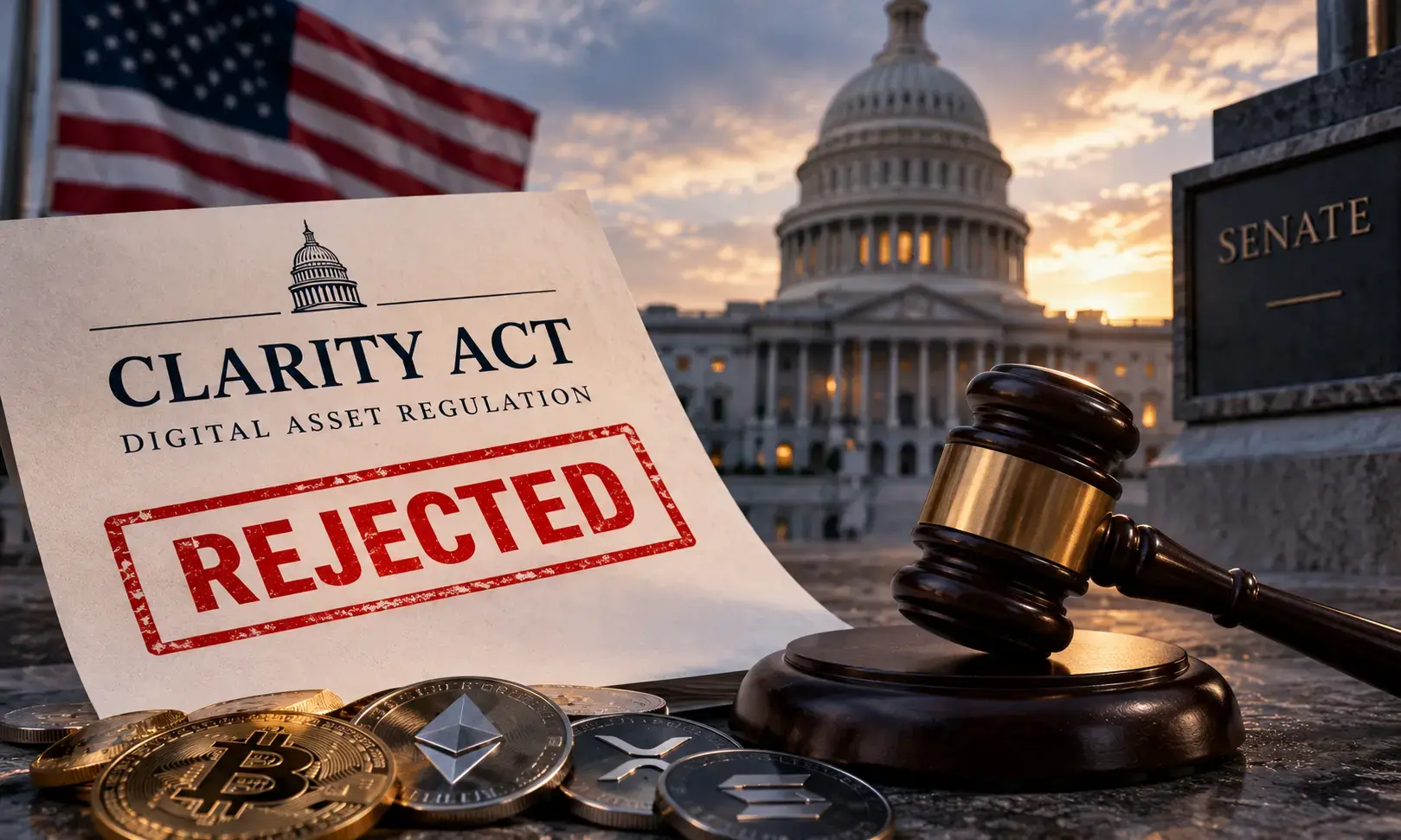
Scenario 3: Political delay
In the third scenario, consideration is delayed until later this year. This would create uncertainty. The crypto market could then temporarily lose ground as institutional investors continue to wait longer.
Yet even in that scenario, the long-term trend is unlikely to change.
The United States increasingly appears to be opting for regulated private stablecoins as an important part of its digital dollar strategy.
What should investors look out for?
The next few weeks are more important than many investors may realize. The first question is whether the Senate Banking Committee finalizes the markup before May 21. If that succeeds, the process could gain momentum.
In addition, statements from senators, regulators and banking organizations remain important. In particular, the attitude of the banking lobby may become decisive. If banks succeed in reopening the compromise, the law could still be delayed or made stricter.
For investors, it is therefore wise to watch not only Bitcoin's price, but also political news from Washington. The next few weeks may determine how much room crypto companies will have to further expand stablecoins, payments and DeFi services.
Conclusion
The CLARITY Act is about much more than new crypto rules. The act could determine how the United States handles stablecoins, digital dollars and the role of crypto companies within the financial system.
For investors, therefore, the coming weeks are not only about price movements, but also about political decision-making. Quick approval can give confidence to the market. Stricter rules, on the other hand, may put pressure on centralized crypto companies. Delay may temporarily create uncertainty.
Still, the broader direction is clear. Stablecoins are becoming increasingly important within the global financial market. The United States does not want to be left behind. Which direction Washington ultimately chooses may become decisive for the next phase of the crypto market.
Disclaimer: Investing involves risk. Our analysts are not financial advisors. Always consult an advisor when making financial decisions. The information and tips on this website are based on our analysts' own insights and experiences. They are therefore for educational purposes only.




-2.webp)