
.svg)
.svg)
.svg)
.svg)
.svg)
.svg)
.svg)
.svg)
.svg)
.svg)
.svg)
.svg)
Publication date: March 5, 2026
China has had a strict policy toward crypto currencies for several years. Since 2021, trading in digital currencies such as bitcoin and stablecoins has been completely banned in mainland China. At the same time, the country is actually investing heavily in blockchain technology and developing its own digital currency.
This approach shows that China supports digital innovation, but only when the government retains control of the financial system.
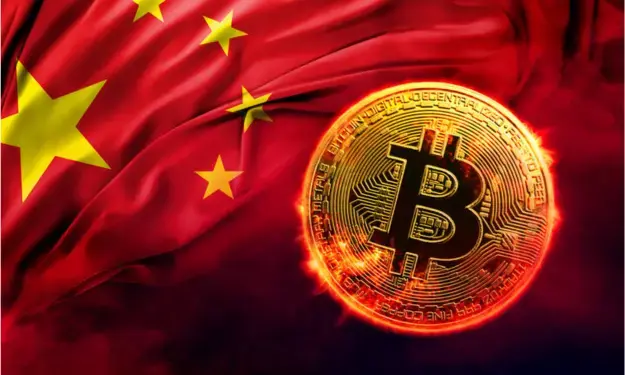
Why China banned crypto trading
China's central bank, the People's Bank of China, considers trading in crypto currencies an illegal financial activity. According to the government, digital currencies pose risks to financial stability and can be used to move capital outside the official banking system.
In addition, social and political considerations also play a role. Because of the sharp price fluctuations in crypto, the government fears that private investors may suffer large losses. According to Beijing, the ban should prevent speculation from leading to financial or social unrest.
Mining did not disappear completely
For many years before the ban, China was one of the main centers for bitcoin production. This was mainly due to cheap electricity and a strong technological infrastructure.
After the ban, many miners moved to other countries, but the activity never completely disappeared. According to recent estimates, China still accounts for a significant portion of global bitcoin production.
This shows that digital activity is difficult to fully control. Moreover, Chinese companies still produce much of the equipment used for cryptomining worldwide.
Blockchain and tokenization
Although crypto currencies are banned, China does actively support the development of blockchain technology. Among other things, the central bank is working on regulations around the tokenization of so-called Real World Assets. In this process, physical assets such as real estate, commodities or shares are digitally recorded on a blockchain.
This can offer new opportunities for financing, for example for companies that want to raise capital through digital tokens. At the same time, the government stresses that strict regulations are needed to prevent fraud and abuse.
The digital yuan
An important part of China's strategy is the development of the digital yuan, also known as the e-CNY. This is a digital version of the national currency issued directly by the central bank.
Unlike bitcoin, the digital yuan does not run on an open and decentralized network. The central bank retains full control over the system. The currency is now being tested in several cities and represents a small but growing portion of digital payments in China.
With the digital yuan, the government is trying to gain more control over the payments system and be less dependent on large technology companies that now handle most of the digital payments.
Conclusion
The Chinese attitude toward crypto currencies shows that the country has a clear distinction between technology and financial control. Free trade in crypto is seen as a risk to stability, capital flows and investor protection. At the same time, the government recognizes that blockchain technology offers important economic opportunities.
By investing in blockchain, tokenization and the digital yuan, China seeks to reap the benefits of digital innovation without losing control of the financial system. In doing so, Hong Kong acts as an experimental environment in which new applications can be carefully tested.
The next few years will show whether this strategy works. China clearly wants to participate in the development of digital finance, but on its own terms: innovation under strict government control.
Disclaimer: Investing involves risks. Our analysts are not financial advisors. Always consult an advisor when making financial decisions. The information and tips provided on this website are based on our analysts' own insights and experiences. They are therefore for educational purposes only.





-2.webp)