.svg)
.svg)
.svg)
.svg)
.svg)
.svg)
.svg)
.svg)
.svg)
.svg)
.svg)
.svg)
What is the Federal Reserve?
← Back to FAQ
The Federal Reserve is the central bank of the United States. This institution, often abbreviated as the Fed, is responsible for monetary policy in the American economy. This means it influences interest rates, the money supply and the stability of the financial system.
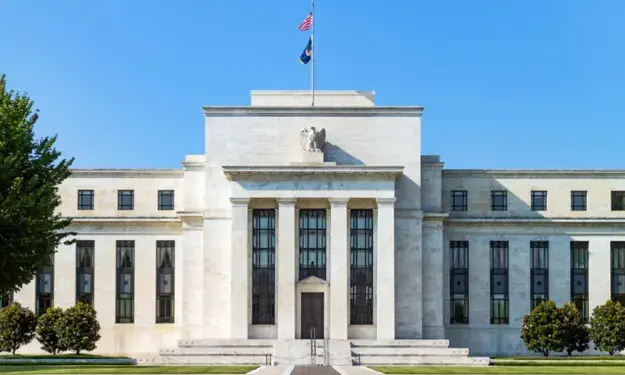
The decisions of the Federal Reserve have a major impact on financial markets worldwide.
The Federal Reserve was established in 1913 to prevent financial crises and make the banking system more stable. The central bank has two main objectives: price stability and maximum employment. To achieve these goals, the Fed can raise or lower the policy interest rate and buy or sell government bonds.
When interest rates are raised, borrowing becomes more expensive and the economy may cool down. When interest rates are lowered, credit becomes cheaper and economic growth can be stimulated. Because the US dollar is a major global currency, decisions of the Federal Reserve affect not only the American economy but also stock markets, bond markets and exchange rates worldwide.
Short example:
Suppose inflation in the United States rises sharply. The Federal Reserve decides to raise interest rates to slow down price increases.
As a result of higher interest rates, loans become more expensive for businesses and consumers.
This can lead to lower investment and spending, which affects corporate profits and share prices.
Disclaimer: Investing brings risks. Our analysts are not financial advisors. Always consult an advisor when making financial decisions. The information and tips provided on this website are based on our analysts' own insights and experiences. Therefore, they are for educational purposes only.