.svg)
.svg)
.svg)
.svg)
.svg)
.svg)
.svg)
.svg)
.svg)
.svg)
.svg)
.svg)
What is stagflation?
← Back to FAQ
Stagflation is an economic condition in which an economy experiences stagnant growth, high unemployment, and high inflation simultaneously. This is an unusual and challenging scenario because inflation typically rises during periods of strong economic growth, not stagnation.
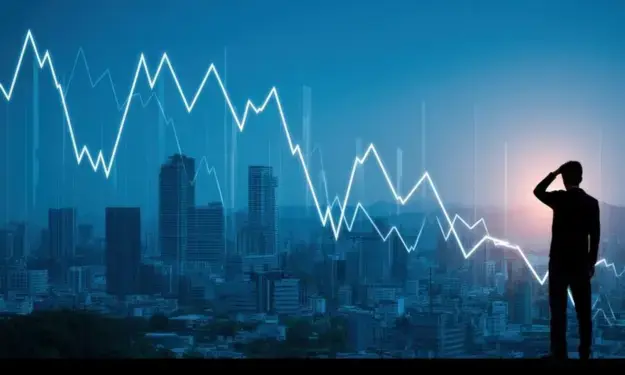
Stagflation occurs when the economy faces rising prices without corresponding growth in employment or production.
During stagflation, consumers face higher prices for goods and services, while businesses struggle with reduced demand and higher production costs. It is difficult for policymakers to address stagflation because the typical solutions for high inflation (raising interest rates) can worsen unemployment, while measures to reduce unemployment (lowering interest rates) can increase inflation.
Short example:
Suppose a country is experiencing 5% inflation, 10% unemployment, and low economic growth.
In this scenario, businesses are struggling with rising costs, but there is little consumer demand to drive growth. The government faces challenges in addressing both inflation and unemployment at the same time, which characterizes stagflation.
Disclaimer: Investing brings risks. Our analysts are not financial advisors. Always consult an advisor when making financial decisions. The information and tips provided on this website are based on our analysts' own insights and experiences. Therefore, they are for educational purposes only.