.svg)
.svg)
.svg)
.svg)
.svg)
.svg)
.svg)
.svg)
.svg)
.svg)
.svg)
.svg)
What is silver?
← Back to FAQ
Silver is a precious metal that is widely used both as an investment asset and in industrial applications. It is traded in financial markets as a commodity and is often seen as a store of value, similar to gold.
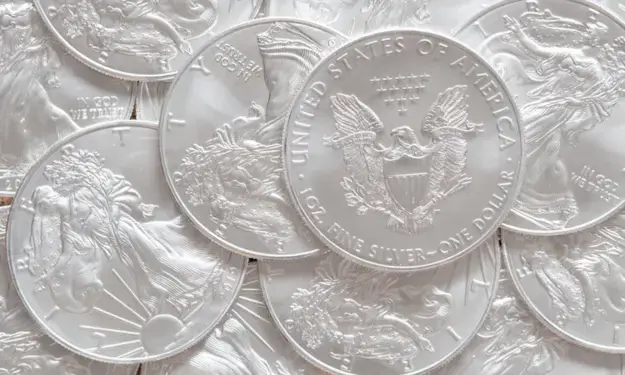
Silver plays a dual role as both an investment asset and an industrial metal.
In financial markets, silver is bought and sold in various forms, including physical bullion, ETFs, and derivatives such as futures. Its price is influenced by factors such as supply and demand, industrial usage, economic conditions, and investor sentiment. Unlike gold, silver has significant industrial demand in sectors such as electronics, solar energy, and manufacturing, which can make its price more volatile. Investors often use silver as a hedge against inflation or economic uncertainty, but its value can fluctuate more due to its dual role in both industry and investment markets.
Short example:
Suppose an investor buys silver when the price is $25 per ounce.
If demand for silver increases due to industrial use and investor interest, the price may rise to $30 per ounce.
The investor can then sell the silver and realize a profit based on the price increase.
Disclaimer: Investing brings risks. Our analysts are not financial advisors. Always consult an advisor when making financial decisions. The information and tips provided on this website are based on our analysts' own insights and experiences. Therefore, they are for educational purposes only.