.svg)
.svg)
.svg)
.svg)
.svg)
.svg)
.svg)
.svg)
.svg)
.svg)
.svg)
.svg)
What is panic selling?
← Back to FAQ
Panic selling refers to a situation where investors quickly sell their assets because they fear that prices will continue to fall. These decisions are often driven by emotions rather than careful analysis. Panic selling usually happens during periods of strong market uncertainty or sudden negative news.
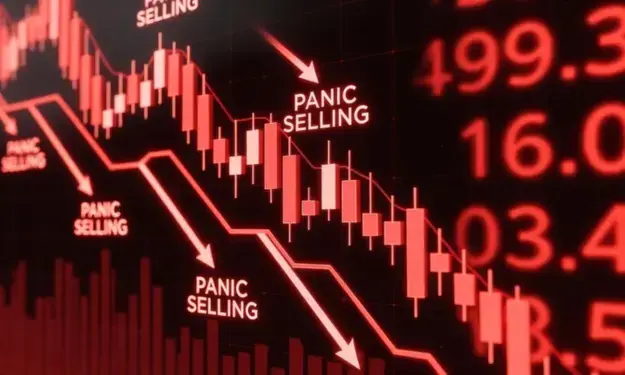
Panic selling can accelerate market declines.
When many investors try to sell at the same time, supply in the market increases rapidly while buyers become more cautious. This imbalance can push prices down even further. Panic selling is often seen during financial crises, major economic shocks, or sharp stock market corrections. Although selling may seem like a way to avoid further losses, emotional selling can sometimes cause investors to exit the market at very low prices.
Short example:
Suppose the stock market drops sharply after unexpected economic news.
Many investors become worried that prices will continue falling.
As fear spreads, large numbers of investors start selling their shares at the same time. Because there are suddenly far more sellers than buyers, prices decline even faster. Investors who sell in panic may lock in losses, even if the market later recovers.
Disclaimer: Investing brings risks. Our analysts are not financial advisors. Always consult an advisor when making financial decisions. The information and tips provided on this website are based on our analysts' own insights and experiences. Therefore, they are for educational purposes only.