.svg)
.svg)
.svg)
.svg)
.svg)
.svg)
.svg)
.svg)
.svg)
.svg)
.svg)
.svg)
What is a recession?
← Back to FAQ
A recession is a period of significant decline in economic activity that lasts for several months or longer. During a recession, production, spending, and investment typically decrease, while unemployment often rises.
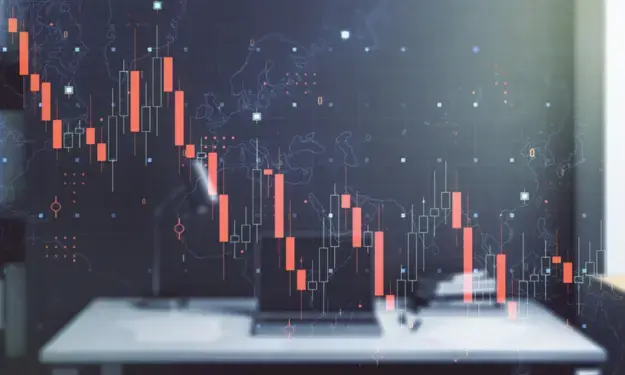
A recession reflects a slowdown in overall economic activity.
Economists often describe a recession as a period in which a country’s gross domestic product (GDP) declines for at least two consecutive quarters. During such periods, businesses may produce less because demand falls, companies may delay investments, and consumers may reduce spending. Financial markets can also become more volatile as investors react to weaker economic conditions and uncertain growth prospects.
Short example:
Suppose a country’s economy grows steadily for several years but then consumer spending and business investment begin to decline.
As companies sell fewer products, production slows and some businesses reduce their workforce.
If the country’s GDP falls for two consecutive quarters and economic activity continues to weaken, economists may classify the situation as a recession.
Disclaimer: Investing brings risks. Our analysts are not financial advisors. Always consult an advisor when making financial decisions. The information and tips provided on this website are based on our analysts' own insights and experiences. Therefore, they are for educational purposes only.