.svg)
.svg)
.svg)
.svg)
.svg)
.svg)
.svg)
.svg)
.svg)
.svg)
.svg)
.svg)
What is a gap?
← Back to FAQ
A gap is a sudden difference between the closing price of a financial asset and its opening price on the next trading session. It appears on a price chart as an empty space where no trading took place between those two price levels. Gaps often occur after important news or events that significantly change investor expectations.
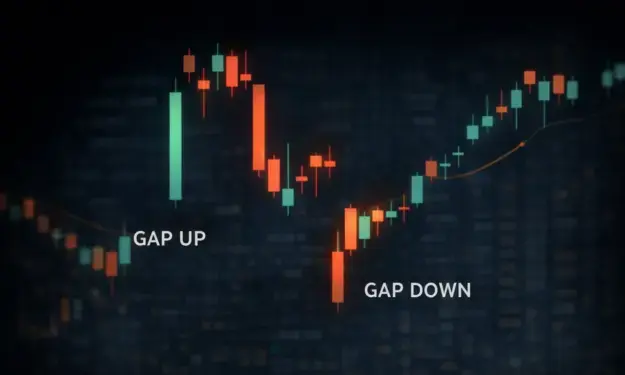
A gap signals that market sentiment shifted strongly between two trading sessions.
Gaps can be caused by earnings announcements, economic data, political developments, or unexpected global events. When new information becomes available outside trading hours, investors may adjust their orders before the market opens. As a result, the asset opens at a much higher or lower price than the previous close. Some gaps are later “filled,” meaning the price returns to the previous level, while others can mark the beginning of a new trend. Traders closely monitor gaps because they may indicate increased volatility and potential trading opportunities, but they also carry higher short term risk.
Short example:
Suppose a stock closes at $50 on Monday.
After the market closes, the company reports much stronger than expected earnings.
On Tuesday, the stock opens at $58 instead of $50, creating a price gap of $8 between the two sessions.
Disclaimer: Investing brings risks. Our analysts are not financial advisors. Always consult an advisor when making financial decisions. The information and tips provided on this website are based on our analysts' own insights and experiences. Therefore, they are for educational purposes only.