.svg)
.svg)
.svg)
.svg)
.svg)
.svg)
.svg)
.svg)
.svg)
.svg)
.svg)
.svg)
← Back to Crypto FAQ
An NFT (Non-Fungible Token) is a unique digital asset stored on a blockchain that represents ownership of a specific item, such as digital art, music, or collectibles. Unlike cryptocurrencies, NFTs are not interchangeable because each token has distinct characteristics.
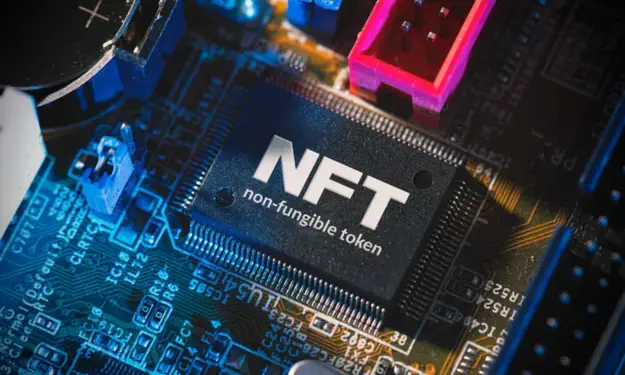
An NFT represents unique ownership of a digital or physical item recorded on the blockchain.
NFTs are created using blockchain technology, most commonly on networks like Ethereum, where each token contains specific metadata that makes it different from any other token. This uniqueness is what makes NFTs “non-fungible,” meaning they cannot be exchanged on a one-to-one basis like Bitcoin or traditional money. NFTs are often used for digital art, in-game items, music rights, and even real-world assets, as they provide a transparent and verifiable proof of ownership. However, the value of an NFT can be highly volatile and largely depends on demand, scarcity, and perceived value. There are also risks, such as market speculation, low liquidity, and the possibility that the underlying asset loses popularity or relevance over time.
Short example:
Suppose an artist creates a digital artwork and turns it into an NFT.
A buyer purchases this NFT, and the blockchain records them as the official owner of that specific piece.
Even if copies of the image exist online, only the NFT holder can prove ownership of the original digital asset.
Disclaimer: Investing brings risks. Our analysts are not financial advisors. Always consult an advisor when making financial decisions. The information and tips provided on this website are based on our analysts' own insights and experiences. Therefore, they are for educational purposes only.



-2.webp)