.svg)
.svg)
.svg)
.svg)
.svg)
.svg)
.svg)
.svg)
.svg)
.svg)
.svg)
.svg)
← Back to FAQ
Indicators are analytical tools used by traders and investors to interpret market data and support decision making. They are typically based on price, volume, or mathematical formulas and help identify trends, momentum, volatility, or potential turning points in financial markets.
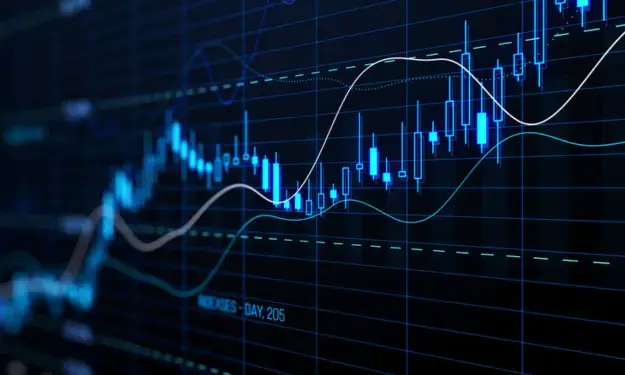
Indicators help translate raw market data into structured signals.
Most indicators are derived from historical price movements and are displayed on charts. Some indicators measure trend direction, while others assess overbought or oversold conditions or confirm the strength of a price move. Although indicators can support analysis, they do not predict the future with certainty. Different indicators can produce conflicting signals, especially in volatile markets.
For that reason, traders often combine multiple indicators and use them alongside risk management rules rather than relying on a single signal.
Short example:
Suppose a trader analyzes a stock chart and applies a moving average indicator.
When the stock price crosses above the moving average, the indicator suggests upward momentum.
The trader uses this signal to enter a position but also sets a stop loss to manage risk in case the signal proves false and the price reverses unexpectedly.
Disclaimer: Investing brings risks. Our analysts are not financial advisors. Always consult an advisor when making financial decisions. The information and tips provided on this website are based on our analysts' own insights and experiences. Therefore, they are for educational purposes only.