
.svg)
.svg)
.svg)
.svg)
.svg)
.svg)
.svg)
.svg)
.svg)
.svg)
.svg)
.svg)
← Back to Crypto FAQ
A cold wallet, also known as cold storage, is a method of securely storing cryptocurrency offline. Unlike hot wallets, which are connected to the internet, cold wallets keep your digital assets safe by storing your private keys offline, making them immune to online threats such as hacking and malware. Cold wallets are ideal for long-term storage of cryptocurrency, as they provide an extra layer of security.
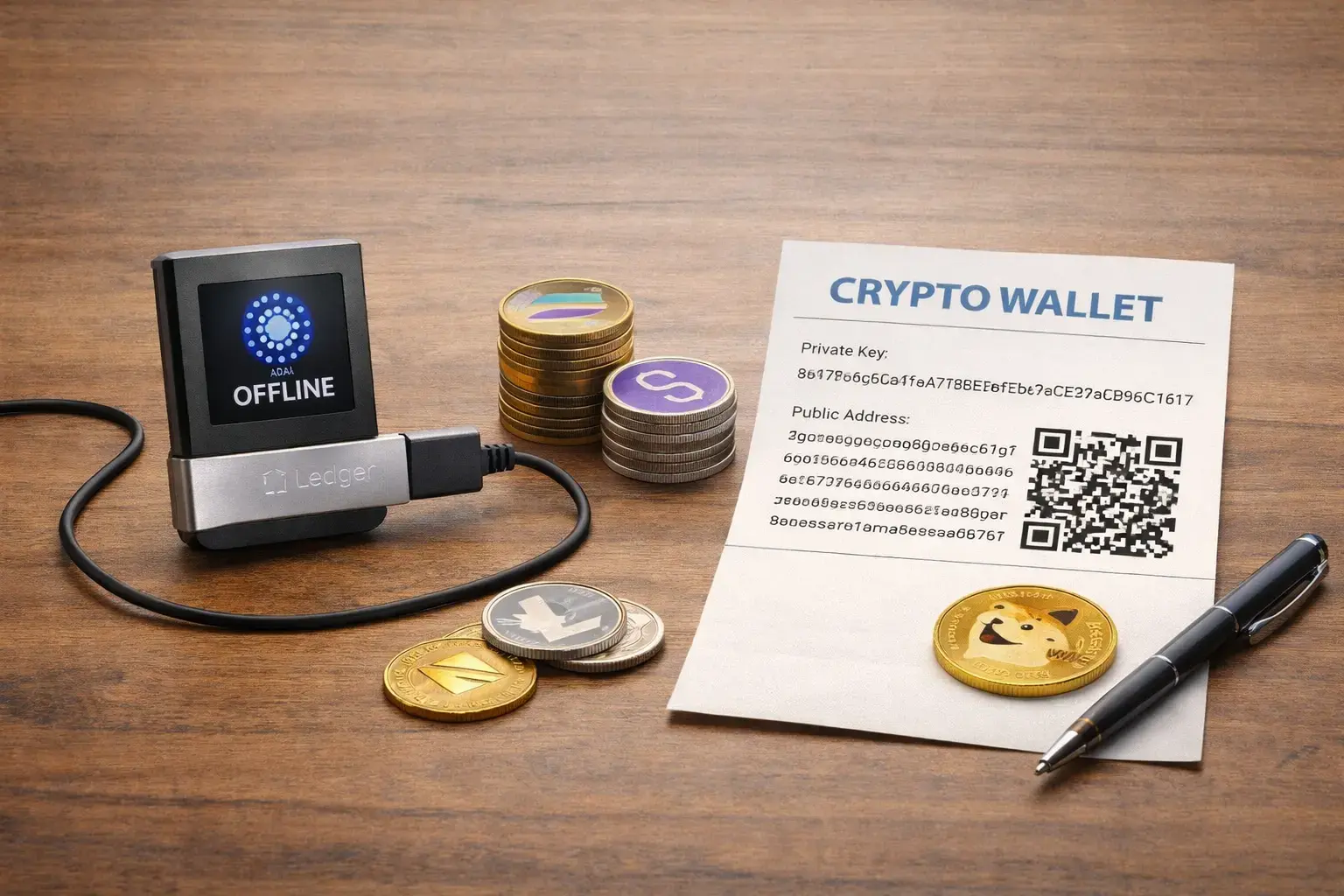
Cold wallets function by storing the private keys needed to access cryptocurrency in an offline environment. This prevents your keys from being exposed to cyberattacks, malware, or phishing attempts. To use the cryptocurrency in a cold wallet, you must physically connect it to a device, sign the transaction offline, and then broadcast the signed transaction to the blockchain.
There are two primary types of cold wallets. The first type is hardware wallets, which are physical devices resembling USB drives that store private keys securely offline. Well-known hardware wallets include Ledger and Trezor. The second type is paper wallets, which are simply physical printouts containing both a private key and a public address. These are generated offline and can be stored in a secure location. Although paper wallets are simple and inexpensive, they are vulnerable to physical damage or loss.
Cold wallets offer enhanced security because they store the private keys offline, making them immune to online risks. They are perfect for long-term storage of cryptocurrency that doesn’t require frequent access. Since the keys are not exposed to the internet, they eliminate the risk of hacking and phishing that can affect hot wallets. However, they do come with some risks. If the cold wallet is lost, stolen, or damaged, access to the cryptocurrency can be permanently lost unless a backup of the private keys exists. Additionally, cold wallets are less convenient for making quick transactions compared to hot wallets, as accessing funds requires physical access to the wallet.
Short example:
Suppose an investor buys Bitcoin and stores it in a hardware cold wallet. To send the Bitcoin to someone, the investor must physically connect the wallet to a computer, sign the transaction offline, and then broadcast the signed transaction to the blockchain. This ensures that the private key never touches the internet, helping to keep the cryptocurrency safe from online threats.
Disclaimer: Investing brings risks. Our analysts are not financial advisors. Always consult an advisor when making financial decisions. The information and tips provided on this website are based on our analysts' own insights and experiences. Therefore, they are for educational purposes only.





-2.webp)