
.svg)
.svg)
.svg)
.svg)
.svg)
.svg)
.svg)
.svg)
.svg)
.svg)
.svg)
.svg)
Publication Date: July 15, 2026
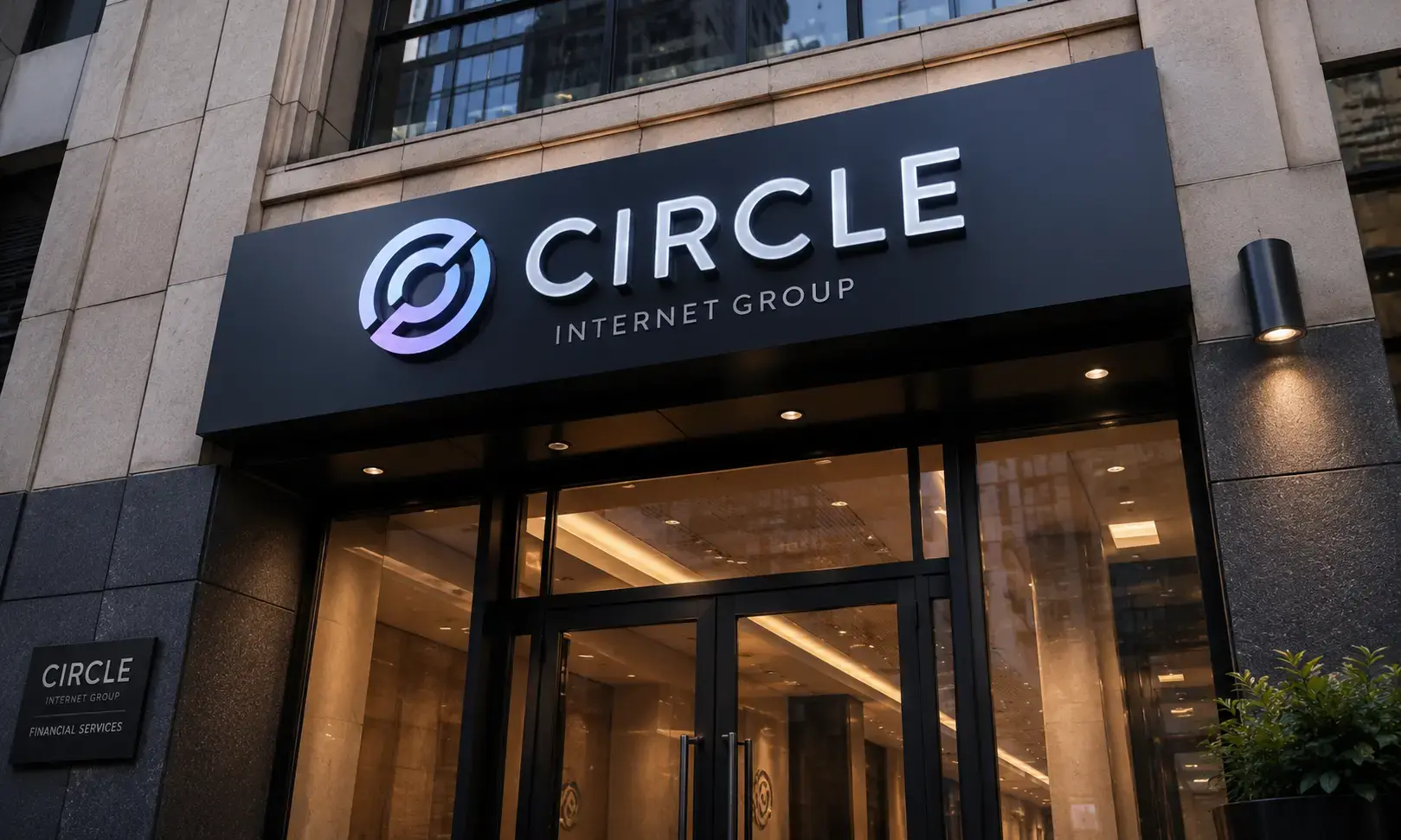
On Friday, July 10, Circle, the issuer of the USDC stablecoin, received final approval from the U.S. regulator, the OCC, to establish a national trust bank. Circle Internet Group has thus received final approval from the Office of the Comptroller of the Currency to launch Circle National Trust, a federally regulated national trust bank that will manage key components of the company’s digital infrastructure. Circle’s stock reacted immediately: the share price rose sharply in pre-market trading after the news broke and ultimately closed the day about 5% higher.
For an industry that has been grappling for years with how stablecoins relate to the traditional banking system, this is no ordinary news story.
What exactly is going on?
The new entity is officially named First National Digital Currency Bank, N.A., and operates under the brand name Circle National Trust. Circle submitted the application on June 30, 2025, received conditional approval in December 2025, and has now, more than a year later, received final approval.
It’s important to understand: this is not a license to become a traditional bank. The charter does not authorize Circle to accept deposits or extend loans as a commercial bank. The trust bank will also not be insured by the FDIC and will not issue stablecoins itself.
What it is intended for: Upon opening, Circle National Trust will securely hold the digital assets of Circle itself and its subsidiaries, acting as a kind of digital vault. Over time, this may be expanded so that other banks and regulated financial institutions can also become clients.
More possibilities may emerge in the future. The license is also structured in such a way that Circle can eventually place the reserves backing USDC under its purview, bringing those reserves under federal oversight. That’s still a long way off for now, but it does indicate where Circle is headed.
Why is this important for investors?
Until now, Circle had to rely on external banks and custodians to hold the dollars and government bonds backing USDC. With its own trust bank, the company can now manage those reserves directly itself. This reduces dependence on third parties and brings USDC closer to the kind of federal oversight that institutional investors are accustomed to seeing from traditional financial institutions.
USDC currently has a market value of approximately $73.2 billion, making the management of those reserves no small matter. A federal banking license adds a layer of credibility that a state license alone does not provide
Circle vs. Tether: the gap is widening
The approval also directly impacts its competitive position relative to market leader Tether. Tether, the issuer of the much larger stablecoin USDT, does not yet hold a comparable U.S. federal banking license and discloses its reserves in a different manner than the model Circle is now establishing under direct OCC supervision. As U.S. regulations for stablecoins take further shape through the GENIUS Act, this gives Circle a head start in the area of compliance.
Circle is not alone in this race, however. Kraken is also actively seeking federal licenses, and Crypto.com received an OCC license in February to operate as a federally regulated crypto custodian. BitGo, Ripple, Paxos, and Fidelity Digital Assets received similar conditional approvals in December. Thus, the stablecoin sector as a whole is moving toward the heart of the U.S. banking system—not just Circle.
Is this temporary enthusiasm or a structural shift?
The timing is telling. On the same day, the global payments network Swift launched a blockchain consortium with 17 banks, including Citi and HSBC, focused on 24/7 payments to compete in the stablecoin market. Earlier in June, a group of more than 140 companies, including BlackRock, Coinbase, Mastercard, Stripe, and Visa, joined the new Open USD initiative.
This is not just an isolated news story, but points to a broader trend: traditional banks and stablecoin issuers are increasingly converging. For Circle, the trust bank is therefore not a one-time milestone, but a structural step toward building federal credibility.
Conclusion
The OCC approval is more than just a license on paper. It grants Circle direct federal oversight of the infrastructure behind USDC, widens the regulatory gap with market leader Tether, and fits into a broader trend in which stablecoins are becoming increasingly intertwined with the traditional banking system.
For investors, this signals that the stablecoin market is maturing and that regulation is no longer just a risk but can also provide a competitive advantage for early adopters. Whether this translates into sustained price gains for Circle shares depends on how quickly the company actually begins to utilize its new powers, with the management of the USDC reserve being the next key step to watch.
Disclaimer: Investing involves risks. Our analysts are not financial advisors. Always consult an advisor when making financial decisions. The information and tips on this website are based on our analysts’ own insights and experiences. They are therefore for educational purposes only.





.webp)